Smart Buildings: Driven By IoT And Energy-Efficient Technologies
Reading time: 10 minutes
Today, commercial buildings are becoming smarter — not just taller, but more intelligent, responsive, and sustainable. A smart building integrates systems such as Heating, Ventilation, and Air Conditioning (HVAC), occupancy, and energy management into a connected ecosystem that senses, analyzes, and responds to its surroundings. This shift is accelerating across smart cities and buildings, where digitalisation is redefining how modern infrastructures operate.
Smart building management solutions like Internet of Things (IoT) connectivity, Electronic Commutation (EC) and advanced vibration sensor technology enable smart buildings to continuously collect and interpret real-time data — including indoor air quality, occupancy rates, vibration levels and energy use. This enables adaptive adjustments that enhance energy efficiency, improve occupant comfort, reduce operating costs, and support sustainability goals.
IoT connectivity serves as the core of smart buildings, integrating sensors, devices, and systems to deliver real-time data on indoor air quality, HVAC system performance, energy efficiency and occupancy levels to advanced building management systems (BMS). This visibility allows facility managers and building owners to identify system inefficiencies and make data-driven decisions—aligning with the rising demand for smart building technologies.
By leveraging IoT-enabled systems, smart buildings can:
For example, the NEXAIRA digital ecosystem delivers real-time visibility into fan speed, vibration, airflow, pressure, and energy consumption through a single dashboard. When paired with high-efficiency EC fans, its demand-based adaptive control can reduce fan energy use by up to 50%, while enhancing occupant comfort, and lifecycle performance.
Through its AI-powered digital twin, NEXAIRA.Systems continuously compares expected and actual system performance to detect deviations and dynamically optimise cooling at the system level—enabling operators of energy-intensive buildings, such as data centres, to reduce energy consumption, improve power usage effectiveness (PUE), and maintain high operational reliability. With ebm‑papst’s digital expertise, they support IoT integration for both on-premises and in the cloud, enabling seamless connectivity and smarter real-time monitoring.
This approach aligns with the World Green Building Council’s “A Changing Business Case”, which highlights how digital twins, AI-driven energy optimisation, smart sensors, and real-time monitoring enhance operational efficiency and create better workplace environments—making retrofitting a strategic approach towards green building goals in smart commercial buildings.
By integrating smart building solutions like NEXAIRA digital ecosystem, smart buildings can optimize cooling performance at both application and system levels —delivering measurable energy savings and supporting the transition toward sustainable, smart building management.
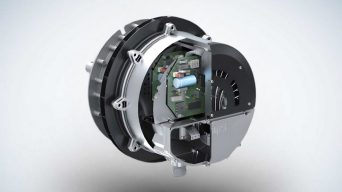
Efficient air circulation is also a crucial factor in smart commercial buildings. Traditional AC fans run at fixed speeds, consuming unnecessary energy and unable to respond to changes in occupancy or indoor air quality. In contrast, EC fans deliver variable-speed control, higher efficiency, and real-time data access—without external components such as Variable Frequency Drives (VFD). Making EC fans the ideal ventilation solution for smart commercial buildings and emerging smart cities and buildings.
By implementing EC fan technology with IoT, smart buildings can benefit from:
Beyond the efficiency and performance of HVAC systems, operational reliability is also critical as part of smart building management solutions. Even under normal conditions, fans can experience heightened vibration at resonant speeds, leading to bearing damage and premature failures. With integrated vibration sensors, EC fans can detect resonance and aid operators to define the critical vibration areas.
How integrated vibration sensors work:
With integrated vibration sensors, fans protect bearings and mechanical components from premature failures while enabling predictive maintenance through early warnings—supporting smart buildings with real-time sensing and adaptive diagnostics.
In summary, smart buildings represent the present and future of building management—intelligent, efficient, and adaptive. By integrating IoT systems and advanced EC fan technology, smart buildings can shift from reactive operation to proactive intelligence, setting a new standard for high-performance, sustainable built environment.
Since the initial development of EC technology, ebm‑papst has worked tirelessly and invested ample funds into improving the efficiency of each new generation of fans. For example, in 2024/25, ebm‑papst invested 140 million euros in research and development—more than ever before.
In addition, our EC fans are designed with various other considerations in mind:
As ebm‑papst moves forward into the future, we aim to engineer a better life by driving innovation and offering sustainable and digital solutions to our partners and customers.
To get started on exploring IoT-enabled systems and EC technology to drive your smart building’s efficiency and sustainability, we recommend engaging our retrofit experts.